
AI & Micro-Incentives: Revolutionising E-Commerce
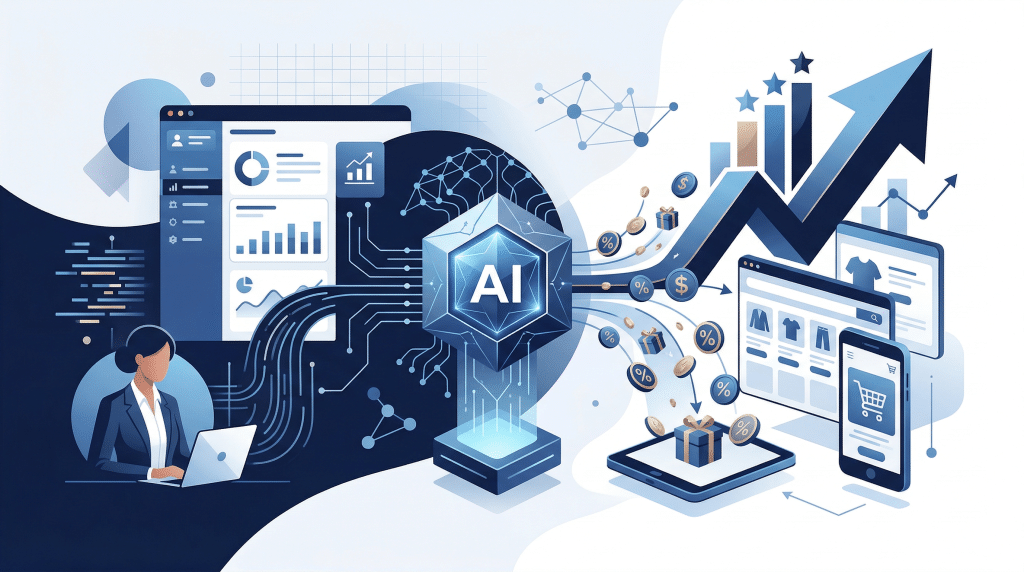
Artificial Intelligence (AI) is revolutionising online retail by introducing micro-incentives that enhance customer engagement and boost sales. These small, targeted incentives are personalised to individual shopping behaviours, making them highly effective. As AI continues to evolve, it provides retailers with sophisticated tools to optimise their strategies, ensuring a competitive edge in the digital marketplace. This article explores how AI-driven micro-incentives are shaping the future of online retail.
- AI is central to personalising customer experiences
- Micro-incentives increase customer engagement
- AI Search Engine Optimisation enhances retail strategies
- LLM Optimisation Services refine AI applications
- Online retailers gain a competitive edge with AI
The Role of AI in Online Retail
Artificial Intelligence is fundamentally changing how retailers interact with consumers. By analysing large datasets, AI can predict consumer behaviour and preferences, allowing for highly personalised shopping experiences. This level of personalisation is crucial in today’s competitive market, where consumers expect brands to understand their needs and deliver relevant content. AI Search Engine Optimisation is also helping retailers to enhance their visibility online, ensuring that their products reach the right audience.
AI’s ability to process and interpret data quickly means that retailers can adapt to changing consumer trends in real-time. This adaptability is vital for maintaining customer satisfaction and loyalty. By integrating AI technologies, retailers can streamline operations, reduce costs, and improve the overall shopping experience. For instance, AI-driven analytics can help retailers predict which products are likely to be in demand, allowing them to adjust inventory levels accordingly and avoid overstocking or stockouts. Imagine a scenario where a sudden surge in interest for eco-friendly products is detected; AI can immediately recommend adjustments in marketing strategies and inventory to capitalize on this trend. Additionally, AI-powered chatbots enhance customer service by providing instant responses to inquiries, ensuring that customers receive timely assistance without the need for human intervention.
- Personalized recommendations based on browsing history and past purchases enable a tailored shopping experience, fostering a deeper connection between the brand and its customers.
- Dynamic pricing algorithms can adjust prices in real-time based on factors such as demand, competitor pricing, and customer behavior, ensuring competitive pricing while maximising profits.
These AI capabilities not only enhance efficiency but also create a more engaging and satisfying retail experience for consumers.
Micro-Incentives: A New Era of Personalisation
Micro-incentives are small rewards or discounts offered to consumers to encourage specific behaviours, such as completing a purchase or signing up for a newsletter. These incentives are powered by AI, which analyses customer data to determine the most effective offers for each individual. By tailoring incentives to personal preferences, retailers can significantly increase conversion rates.
The use of micro-incentives is growing rapidly as more retailers recognise their potential to drive sales. Unlike traditional discounts, micro-incentives are highly targeted, ensuring that they reach the right audience at the right time. This precision not only improves the effectiveness of marketing campaigns but also enhances the customer experience by providing relevant and timely offers.
AI Search Engine Optimisation: Boosting Retail Visibility
AI Search Engine Optimisation is a critical tool for online retailers looking to improve their search rankings and attract more customers. By leveraging AI algorithms, retailers can optimise their websites and content to ensure they appear prominently in search engine results. This optimisation is essential for increasing online visibility and driving traffic to retail websites.
AI-driven SEO strategies involve analysing search patterns and consumer behaviour to identify the most effective keywords and content strategies. This data-driven approach enables retailers to refine their marketing efforts, ensuring that they reach their target audience more effectively. Additionally, AI can automate many aspects of SEO, saving retailers time and resources.
LLM Optimisation Services: Enhancing AI Applications
Large Language Models (LLMs) are a type of AI that can understand and generate human-like text, making them invaluable for customer service and content creation. LLM Optimisation Services help retailers to fine-tune these models, ensuring they deliver accurate and relevant responses to customer inquiries. This optimisation enhances the overall customer experience and can lead to increased satisfaction and loyalty.
By integrating LLMs into their operations, retailers can provide personalised customer support at scale. These models can handle a wide range of queries, from product information to order tracking, freeing up human agents to focus on more complex issues. This efficiency not only improves customer service but also reduces operational costs.
The Competitive Edge of AI in Retail
Embracing AI technologies gives online retailers a significant competitive advantage. By automating routine tasks and providing valuable insights into consumer behaviour, AI enables retailers to make data-driven decisions that enhance their strategies. This advantage is particularly important in the fast-paced world of online retail, where staying ahead of trends is crucial for success.
AI also allows retailers to offer a more seamless and personalised shopping experience, which is increasingly important as consumer expectations continue to rise. By using AI to anticipate and meet these expectations, retailers can build stronger relationships with their customers and drive long-term growth.
Future Trends in AI and Retail
As AI technology continues to advance, its applications in retail will become even more sophisticated. Future trends may include the use of AI for predictive analytics, which can forecast consumer trends and help retailers plan their inventory more effectively. Additionally, AI could play a role in enhancing the in-store experience through technologies like augmented reality and virtual assistants.
The integration of AI into retail is still in its early stages, but its potential is vast. As more retailers adopt AI-driven strategies, the industry will continue to evolve, offering consumers more personalised and engaging shopping experiences. Retailers that embrace these changes will be well-positioned to thrive in the digital marketplace.
Frequently Asked Questions
What is the trend in online shopping in South Africa?
Online shopping in South Africa is experiencing significant growth as more consumers turn to digital platforms for convenience and variety. The trend is driven by increased internet penetration and mobile device usage, which make it easier for consumers to access online stores and shop from anywhere.
Retailers in South Africa are also enhancing their online presence by offering better user experiences and integrating AI technologies to personalise shopping experiences. This trend is expected to continue as more consumers become comfortable with online transactions and seek out the benefits of digital shopping.
What are some current retail trends?
Current retail trends include the adoption of AI for personalisation and automation, the growth of mobile commerce, and the increasing importance of social media in influencing purchasing decisions. Retailers are also focusing on sustainability and ethical sourcing as consumers become more conscious of environmental and social issues.
Additionally, the rise of omnichannel retailing, where consumers can shop seamlessly across online and offline platforms, is a significant trend. Retailers are investing in technologies that enable them to provide a consistent and integrated shopping experience across all channels.
What are the 5 P’s in retail?
The 5 P’s in retail refer to Product, Price, Place, Promotion, and People. These elements are crucial for developing effective retail strategies and ensuring that products meet consumer needs. Product refers to the items being sold, while Price involves setting competitive and profitable pricing strategies.
Place relates to the distribution channels used to reach consumers, and Promotion involves the marketing efforts to attract and retain customers. People, the fifth P, focuses on the customer service and experience that retailers provide, which can significantly impact customer satisfaction and loyalty.
What are the top 3 online retailers?
The top three online retailers globally are Amazon, Alibaba, and eBay. These companies have established themselves as leaders in the e-commerce industry by offering a wide range of products, competitive pricing, and excellent customer service. Their platforms are known for their user-friendly interfaces and efficient delivery systems.
In addition to their extensive product offerings, these retailers have invested heavily in technology and innovation to enhance the shopping experience. They continue to expand their reach and influence in the global market, setting benchmarks for other online retailers.
How is AI impacting customer service in retail?
AI is transforming customer service in retail by enabling more efficient and personalised interactions. AI-powered chatbots and virtual assistants can handle routine inquiries, providing instant responses and freeing up human agents to focus on complex issues. This efficiency improves response times and enhances the customer experience.
Additionally, AI can analyse customer data to offer personalised recommendations and solutions, further enhancing satisfaction. By leveraging AI technologies, retailers can provide high-quality customer service at scale, meeting the demands of today’s consumers who expect fast and accurate assistance.