

EEAT: The Ultimate Shield for Authentic Content
EEAT, which stands for Experience, Expertise, Authoritativeness, and Trustworthiness, is a crucial framework for ensuring content authenticity. As AI-generated content becomes more prevalent, maintaining genuine and reliable information is vital. EEAT helps content creators build trust and authority by focusing on personal insights and verified data, which AI cannot easily replicate.
- EEAT is essential for maintaining content authenticity
- Personal stories and unique data enhance trust
- AI content lacks the personal touch of EEAT
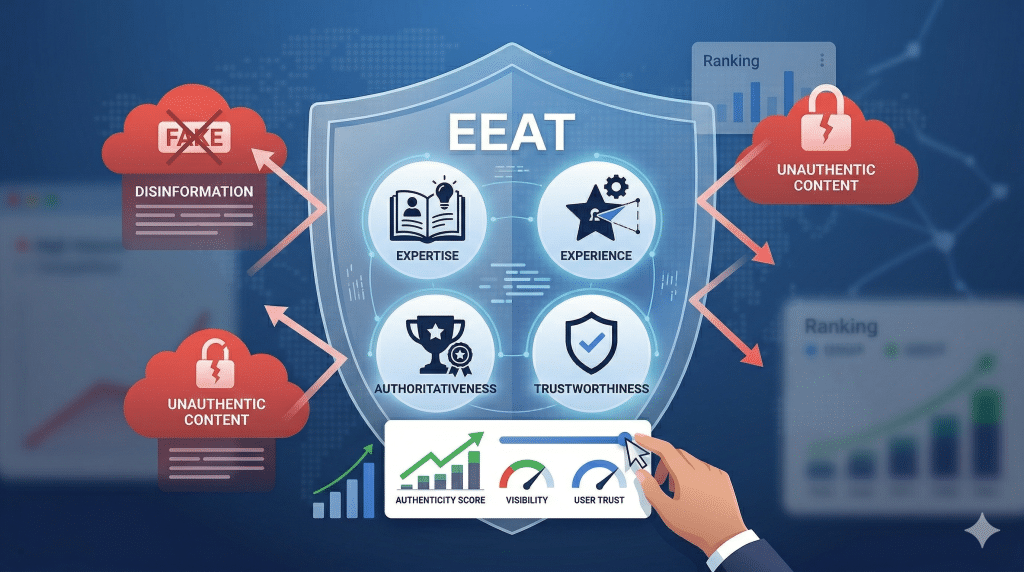
Understanding the EEAT Framework
EEAT stands for Experience, Expertise, Authoritativeness, and Trustworthiness, forming the cornerstone of content that truly connects with audiences amidst the overwhelming presence of AI-generated material. Experience encompasses the unique insights and personal anecdotes that only a human touch can provide. Consider a travel blogger who shares tales from their journeys, offering perspectives that AI simply cannot mimic. This human element makes content both relatable and engaging. Expertise signifies the depth of knowledge brought by a creator to a subject, like a seasoned chef imparting nuanced cooking advice drawn from years of hands-on practice and experimentation. Authoritativeness pertains to the credibility and acknowledgment a creator earns within their domain, such as a tech journalist whose reputation for insightful reviews and analyses has secured the trust of their audience. Trustworthiness guarantees the reliability and accuracy of information, exemplified by a healthcare professional who diligently cites medical studies and maintains transparency regarding sources. Together, these pillars form a solid framework that not only enhances content quality but also strengthens its defense against the impersonal nature of AI-generated material. For further insights, explore AI Search Engine Optimisation and learn more about our LLM Optimisation Services.
The Role of Experience in Content Creation
Experience is a unique human trait that AI cannot replicate. Personal stories and anecdotes add depth and authenticity to content, making it relatable and engaging. When creators share their own experiences, it builds a connection with the audience. This connection fosters trust and encourages readers to return for more. Experience also allows creators to provide unique perspectives that AI-generated content lacks, thus enhancing the content’s overall value.
Expertise: The Foundation of Reliable Information
Expertise is critical in establishing a creator’s authority on a subject. It involves a deep understanding and knowledge that comes from years of study or practice. This level of expertise ensures that the information shared is accurate and reliable. In a world where misinformation is rampant, expertise acts as a safeguard against inaccuracies. Content backed by expertise not only informs but also educates the audience, providing them with insights they can trust.
Building Authoritativeness Through Credibility
Authoritativeness is achieved by building credibility and recognition in a specific field. This can be done through consistent quality content, professional qualifications, and peer recognition. When a creator is seen as an authority, their content is more likely to be trusted and shared. Authoritativeness also involves engaging with the community and contributing to industry discussions. This engagement enhances visibility and reinforces the creator’s position as a trusted source of information.
Trustworthiness: The Pillar of Genuine Content
Trustworthiness is the cornerstone of all content. It ensures that the information provided is not only accurate but also ethical and unbiased. Trustworthy content respects the audience’s intelligence and provides value without misleading them. Building trust involves transparency, such as citing sources and acknowledging limitations. When audiences trust a creator, they are more likely to engage with the content and recommend it to others, thus expanding its reach and impact.
Why AI Content Falls Short of EEAT Standards
AI-generated content, while efficient, often lacks the depth and authenticity that EEAT provides. AI can process data and generate text, but it cannot replicate the personal experiences and insights that come from human creators. Furthermore, AI content may sometimes ‘hallucinate’ or produce inaccurate information. This lack of reliability can undermine trust and credibility. By focusing on EEAT, content creators can ensure their work remains authentic and valuable, setting it apart from AI-generated material.
Frequently Asked Questions
What is EEAT?
EEAT stands for Experience, Expertise, Authoritativeness, and Trustworthiness. It is a framework used to evaluate the quality and authenticity of content. Each element plays a crucial role in ensuring that information is reliable and valuable to the audience. Experience involves personal insights, Expertise relates to in-depth knowledge, Authoritativeness is about credibility, and Trustworthiness ensures accuracy and ethical standards.
EEAT is particularly important in the digital age, where AI-generated content is becoming more common. By adhering to EEAT principles, content creators can differentiate their work from AI content, ensuring it remains trustworthy and authoritative.
How does EEAT improve content authenticity?
EEAT improves content authenticity by focusing on elements that AI cannot replicate. Personal experiences and insights, which are part of the Experience component, add a layer of authenticity that AI lacks. Expertise ensures that the content is accurate and informative, while Authoritativeness and Trustworthiness reinforce the creator’s credibility and reliability.
By incorporating these elements, content creators can build a strong connection with their audience, fostering trust and loyalty. This approach not only enhances the content’s authenticity but also its overall effectiveness and reach.
Can AI-generated content meet EEAT standards?
While AI-generated content can be informative, it often falls short of meeting EEAT standards. AI lacks the personal touch and insights that come from human experience. It can generate text based on data, but it cannot provide the nuanced understanding that expertise offers. Additionally, AI content may sometimes be inaccurate or misleading, affecting its trustworthiness.
Content creators who focus on EEAT principles can ensure their work stands out by providing genuine, reliable, and authoritative information that audiences can trust.
Why is trustworthiness essential in content?
Trustworthiness is essential because it ensures that the audience receives accurate and ethical information. In a world where misinformation is prevalent, trustworthy content stands out as a reliable source. It respects the audience’s intelligence and provides value without misleading them.
Building trust involves transparency and honesty, such as citing sources and acknowledging limitations. When audiences trust a creator, they are more likely to engage with the content and recommend it to others, increasing its impact.
How can content creators enhance their authoritativeness?
Content creators can enhance their authoritativeness by consistently producing high-quality content that demonstrates their expertise. Engaging with the community and participating in industry discussions can also boost credibility. Professional qualifications and peer recognition further establish authority in a specific field.
Authoritativeness is reinforced by being visible and active in relevant spaces, contributing valuable insights, and maintaining a strong online presence. This approach helps build a reputation as a trusted source of information, encouraging audience trust and engagement.