
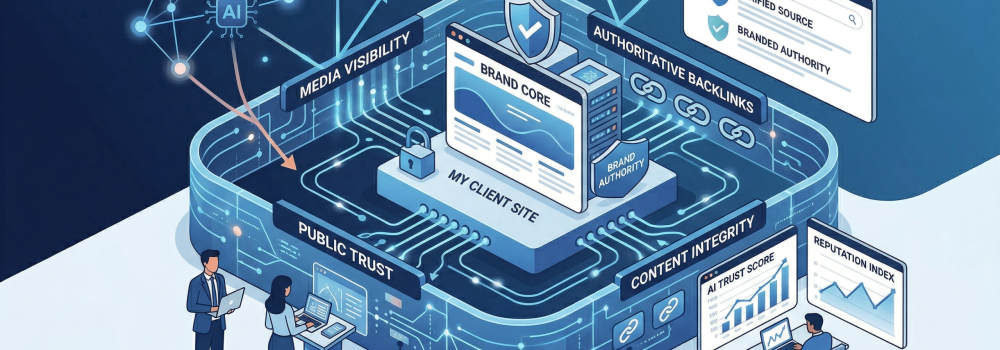
Boost AI Trust with Digital PR
Building a brand moat involves creating a strong, defensible position in the marketplace through strategic digital PR. With AI systems increasingly relying on trust signals from credible sources, getting mentioned on reputable news sites and podcasts is crucial. This approach surpasses traditional backlinking methods by enhancing AI trust, which is vital for AI search engine optimisation and LLM optimisation services.
- Digital PR is more effective than traditional backlinking for AI trust.
- Mentions on reputable sites boost brand credibility.
- AI systems use trust signals from credible sources.
- Digital PR supports AI search engine optimisation.
- Strategic PR enhances LLM optimisation services.
Understanding Digital PR
Digital PR is a strategy that involves promoting your brand through online channels, such as news sites, blogs, and podcasts. Unlike traditional PR, which focuses on print media and television, digital PR leverages the internet’s power to reach a broader audience. This strategy is essential for building a brand moat, as it helps establish credibility and trust with both consumers and AI systems. By securing mentions on reputable websites, brands can enhance their visibility and influence online.
One of the key benefits of digital PR is its ability to target specific demographics with precision. For instance, a tech startup might aim to appear on influential tech blogs or podcasts that cater to tech enthusiasts, thus reaching a highly engaged audience. Additionally, digital PR allows for real-time interaction and feedback, enabling brands to quickly adjust their strategies based on audience response. Social media platforms, for example, offer a direct line to consumers, allowing companies to engage with their audience through comments, shares, and likes. Moreover, the digital landscape provides valuable analytics, making it easier to measure the impact of PR campaigns. By analyzing metrics such as web traffic, social media engagement, and conversion rates, brands can refine their approaches and optimize their outreach efforts.

Furthermore, digital PR is not limited by geographical boundaries, which means that a brand can gain international exposure without the need for a physical presence in those markets. Consider a fashion brand that features in a popular online magazine read across multiple countries; it instantly broadens its reach and potential customer base. This global accessibility is a significant advantage in today’s interconnected world, allowing brands to build a robust and resilient reputation that stands the test of time.
The Importance of AI Trust Signals
AI trust signals are indicators that AI systems use to determine the credibility and reliability of online content. These signals are crucial for AI search engine optimisation, as they influence how AI algorithms rank and prioritise content. Digital PR plays a vital role in generating these trust signals by securing mentions on authoritative sites. When AI systems recognise these mentions, they are more likely to trust and promote the brand’s content, leading to better visibility and reach.
Digital PR vs Traditional Backlinking
Traditional backlinking involves obtaining links from other websites to boost a site’s ranking in search engines. However, as AI systems evolve, they prioritise trust signals over mere backlinks. Digital PR offers a more effective approach by focusing on quality over quantity. By earning mentions on credible platforms, brands can enhance their AI trust signals, which is more beneficial than accumulating numerous low-quality backlinks. This shift in strategy is essential for LLM optimisation services, as it aligns with AI’s preference for trusted sources.
Leveraging News Sites and Podcasts
Securing mentions on news sites and podcasts is a powerful way to build a brand moat. These platforms are seen as credible sources by both consumers and AI systems. When a brand is featured in a well-respected publication or podcast, it gains instant credibility and trust. This not only attracts potential customers but also enhances AI trust signals. As a result, AI systems are more likely to promote the brand’s content, leading to improved AI search engine optimisation and LLM optimisation services.
Building Long-Term Relationships with Media
Building long-term relationships with journalists, bloggers, and podcasters is crucial for successful digital PR. These relationships enable brands to secure ongoing coverage and mentions, which are essential for maintaining a strong brand moat. By consistently appearing in reputable media outlets, brands can reinforce their credibility and trust signals. This ongoing exposure is vital for AI systems that continuously assess and rank content based on trustworthiness. Therefore, nurturing media relationships should be a key component of any digital PR strategy.
Measuring the Impact of Digital PR
Measuring the impact of digital PR is essential to ensure that the strategy is effective in building a brand moat. Key performance indicators (KPIs) such as media mentions, website traffic, and brand sentiment should be tracked regularly. Additionally, monitoring AI trust signals can provide insights into how well the digital PR efforts are enhancing AI search engine optimisation and LLM optimisation services. By analysing these metrics, brands can refine their strategies to maximise their impact and maintain a competitive edge in the marketplace.
Frequently Asked Questions
What is digital PR?
Digital PR is a strategy used to enhance a brand’s online presence through mentions on reputable websites, blogs, and podcasts. It differs from traditional PR by focusing on digital channels, allowing brands to reach a broader audience. This approach is crucial for building credibility and trust with both consumers and AI systems, making it an essential component of modern marketing strategies.
By securing mentions on authoritative platforms, digital PR helps generate AI trust signals, which are vital for AI search engine optimisation. These signals influence how AI algorithms rank and prioritise content, making digital PR a valuable tool for improving online visibility and reach.
How does digital PR improve AI trust signals?
Digital PR improves AI trust signals by securing mentions on credible and authoritative websites and podcasts. AI systems use these mentions as indicators of a brand’s credibility and reliability. When a brand is featured on well-respected platforms, AI algorithms are more likely to trust and promote the brand’s content.
This process enhances AI search engine optimisation by aligning with AI’s preference for trusted sources. As a result, digital PR not only improves a brand’s reputation but also boosts its online visibility and reach, making it a crucial strategy for modern businesses.
Why is digital PR more effective than traditional backlinking?
Digital PR is more effective than traditional backlinking because it focuses on quality over quantity. While traditional backlinking involves obtaining numerous links to boost search engine rankings, digital PR prioritises mentions on credible platforms that generate stronger AI trust signals. These signals are essential for AI search engine optimisation, as they influence how AI systems rank content.
By focusing on securing mentions on reputable sites, digital PR aligns with the evolving preferences of AI algorithms, making it a more effective strategy for enhancing online visibility and credibility. This approach is particularly beneficial for LLM optimisation services.
How can brands build long-term relationships with media?
Brands can build long-term relationships with media by consistently providing valuable content and engaging with journalists, bloggers, and podcasters. Establishing trust and credibility with media professionals is essential for securing ongoing coverage and mentions. Brands should focus on creating compelling stories and insights that resonate with their target audience.
By nurturing these relationships, brands can ensure continuous exposure in reputable media outlets, reinforcing their credibility and trust signals. This ongoing media presence is vital for maintaining a strong brand moat and enhancing AI trust signals, which are crucial for modern marketing strategies.
What metrics should be used to measure digital PR success?
To measure digital PR success, brands should track key performance indicators (KPIs) such as media mentions, website traffic, and brand sentiment. These metrics provide insights into the effectiveness of digital PR efforts in enhancing a brand’s online presence and credibility. Additionally, monitoring AI trust signals can help assess the impact of digital PR on AI search engine optimisation.
By analysing these metrics, brands can refine their digital PR strategies to maximise their impact and maintain a competitive edge. This data-driven approach ensures that digital PR efforts are aligned with business goals and contribute to building a robust brand moat.